

Even Without August
Why We Fear Being Too Dark And How Grief Reminds Us That Love Came First

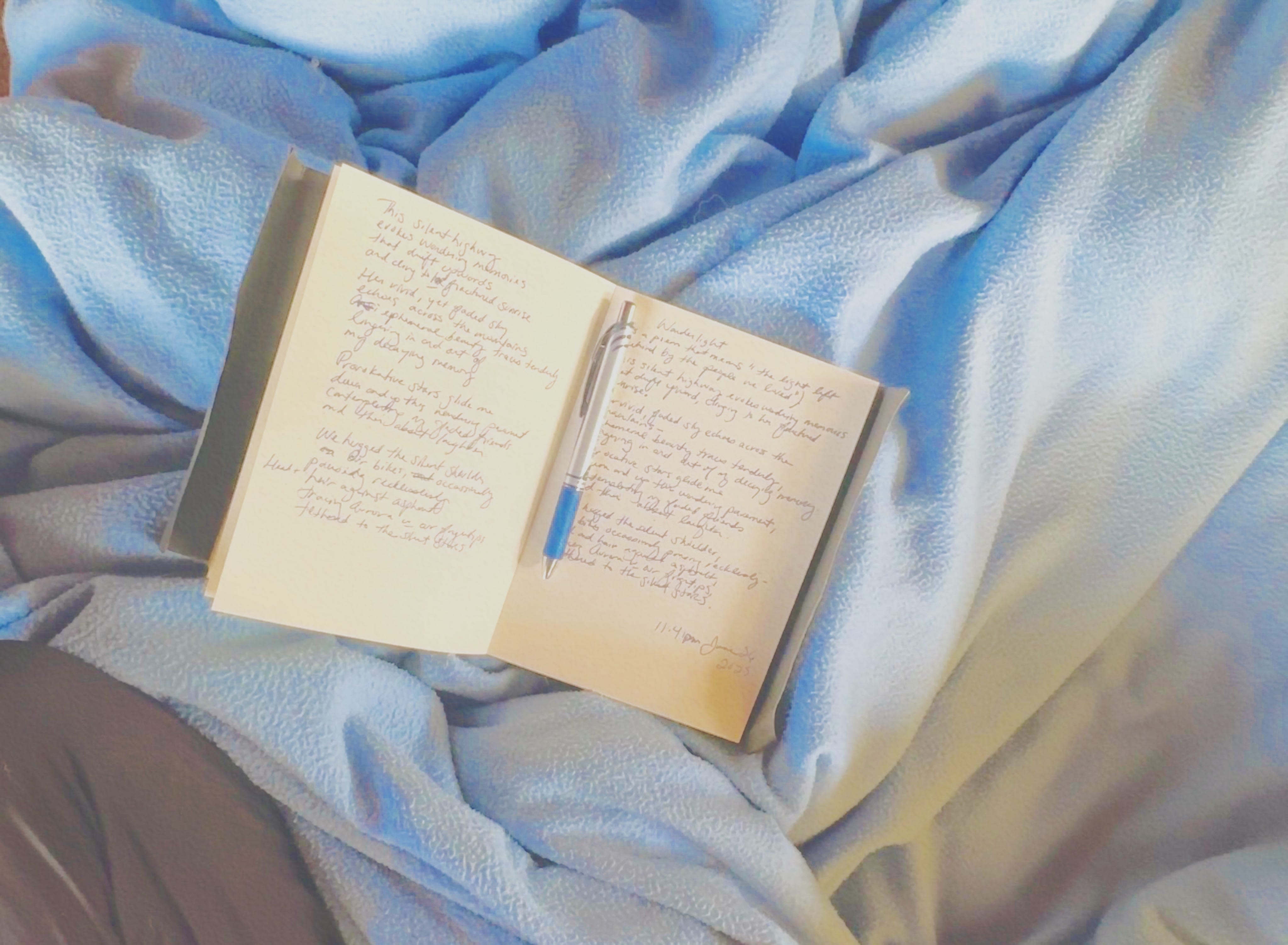
August’s journal.
I’m still grieving the loss of my August journal. It held all of that month’s thoughts, pages and pages I can’t seem to stop reaching for. I still have June and July’s, and I flip through them sometimes, trying to reassure myself that not everything is gone. Most days I do a little search, pulling out drawers and pushing back dresses, hoping it’s tucked away somewhere. But it never is. Each time, the emptiness washes over me again. At first, I resist it, telling myself it has to be here, hidden in some corner of my home. And then I realized it wasn’t. That loss sits with me. And this time, I let it.
I picture a stranger finding it on a bench I must have left it on, flipping through my unfiltered scribbles and the poems I wrote half-asleep. Or maybe no one ever picked it up. Maybe it’s still sitting there. Or maybe it’s caught in some forgotten corner of my apartment. Either way, the pages of August are gone.
At the yoga studio last week, where I teach barre and hot Pilates, I ran into a colleague I adore. We always greet each other with a big hug, and I love hearing about her life. She’s younger than me, but wise beyond her years. At the end of June, when I got the devastating news that a friend from my community had been taken from us, she was one of the first people I saw at work. It felt strange, almost impossible, to move through the motions with my barre students, exchanging smiles and hellos while carrying that kind of news inside me. She knew how to hold space for me. Her own profound loss burned into her being, leaving a quiet strength in the way she moved through the world.
This week we started talking about a poetry night one of our colleagues is hosting. We’re both thinking about reading something, and immediately my mind went to my missing journal—the one that held all of August’s poems. I felt the ache of it again, that second loss.
“Do you know what you’re going to read?” she asked.
“I don’t know,” I said, still clinging to the idea I might find my journal before then.
“I’m nervous to read mine,” she admitted. “It’s all so dark.”
“Mine’s dark too,” I told her. “But honestly, we need more realness in the world. If your real is dark, that’s okay.” Then I offered, half-serious: “What if you read mine and I read yours?”
An image flickered across my mind: standing in front of a small audience, reading her dark poetry out loud. It didn’t seem like such a bad idea. But if I wanted her to read mine, I’d have to actually write something new. Or maybe I’d read a poem by someone else, The Journey by Mary Oliver.
The poem is about finally getting fed up with serving everyone else’s needs and deciding to serve your own. But part of me wanted to read something I wouldn’t usually share aloud, something from the darker corners of my mind. I quickly pushed the idea away, picturing a room of perplexed faces and scrunched brows.
Do people at a poetry reading really want to hear my angsty thoughts—the ones usually reserved for my husband and my mother? Or maybe the better question is: why do we equate dark with bad?
There’s so much social pressure to stay upbeat and positive. And honestly, I am generally a sunny person. I love to smile. I love to play and make people feel good. If you didn’t know me, you might even assume I was one of those toxic-happy people. But if you know me (or if you’ve read my newsletter) you know I carry a lot of insecurities. And I share them because I believe sharing creates intimacy. Darkness is part of being human. There’s so much ache and pain we carry; if we don’t have a place to put it, we’d lose our minds.
The intimacy I’ve experienced with others when I’ve shared my pain and my harder stories has been deeply healing. That intimacy is why I write, dance, paint, act—why I create at all. Yet the fear of judgment is still very real. It’s what almost stops me from hitting “post” on every Substack newsletter.
Years ago, I even had a short stint doing stand-up comedy. (Not exactly my forte, but fun!) It was part of a group focused on mental health, so my five-minute bit touched on anxiety, depression, and body dysmorphia I struggled with throughout my teens and twenties. I performed it all over Vancouver, even at the Stanley Theatre for a sold-out audience.
My opening bit was dark: I pretended to be a mime trapped in a box, and the only way out was to ‘unalive’ myself. Even typing this now makes me cringe at how dark it was. But the audience roared with applause. At one point my ring got caught in a big hoop earring, and the crowd howled as I tried to untangle myself.
The truth is, after those shows, people (especially young people) would often come up to thank me. They said the set brought light to their darkness, humour to subjects that felt impossible to talk about. And yet, after a while, I panicked. I became afraid of judgment, contacted the organizer, and asked them to remove every single video from the internet. Even though I knew how healing it was for both me and others, it still felt too raw, too much.
Now, years later, I find myself back where I started, craving intimacy at a time when we need connection more than ever. So if you’ve been holding back from sharing your darker feelings or words, maybe try letting just one trusted person in. You might be surprised, it could bring you closer.
“Do you want to hear a poem about grief that I love?” my colleague asked, snapping me back to reality.
“Yes,” I said.
She pulled out her phone and read a poem by the poet Donna Ashworth:
Love Came First
You don’t move on after loss but you must move with. You must shake hands with grief, welcome her in, for she lives with you now. Pull her a chair at the table and offer her comfort. She is not the monster you first thought her to be. She is love. And she will walk with you now, peacefully. If you let her. And on days when your anger is high, remember why she came, remember who she represents. Remember. Grief came to you, my friend, because love came first. Love came first.
The poem shot straight into my heart like liquid light, and warm tears spilled from my eyes. She rushed over and hugged me. We laughed because I had exactly sixty seconds before I needed to lead my barre students.
“I made you cry! And now you have to teach. Sorry!” she said.
Truth is, it was a gift: a moment of connection, of grief that was actually love in disguise. I could handle the well of emotion. We are bundles of it, always, even when we’re teaching, even when we’re sweating, even when we’re grieving.
I walked down the hallway into the barre room, still wiping tears from my face, but my heart felt warm. I began class the way I always do:
“Hi everyone! My name is Ashley Evans. Nice to see y’all. Take a deep breath in and do a quick body scan. Ask yourself how you’re feeling on a scale of one to ten, physically and emotionally. Clock it now, and we’ll check in again at the end of class.”
I told them I was at a ten and I was—because of that connection, because grief had reminded me what love really is. Even without my August words on the page, I carried their weight, their ache, and their beauty with me.
Question for the comments: Have you ever lost something that felt like a piece of yourself? And if you’re willing to go deeper: what’s one “dark” thought or feeling you’ve been afraid to share?

Yup. I've lost several pieces and gain news ones. Empty spaces never stay empty for real...they get filled with emotions first to prepare what you will allow in once you are ready to "let the lost go". Letting go is never a stop to aching as the echo of the loss will always reverb tru broken bones. But that's transformation and aching is part of change, as it pulls you out into the dark and evolution. That's what we become: frankenstein's monsters of emotions, each of us with their own special blend of polished dark stuff.
My dark thought: why is my life so good right now after I've lost a part of myself that will never come back? And mostly...why can't I even rememeber how she looked like, even though she was the one thing I ever wanted?
Maybe my pain was necessary to be fine now...even if with that part of me I've lost my drive to write.